
Quantum Computing & Artificial Intelligence
Harnessing the Synergy of Two Emerging Technologies
Released: 06/17/2026

- The foundational concepts behind quantum computing and artificial intelligence
- How quantum computing can accelerate AI training, optimization, and machine learning
- How AI can support quantum algorithm development and error correction
- Emerging QAI use cases and industry applications
- The technical, economic, and security challenges facing QAI adoption




Download this Resource
Prefer to access this resource without an account? Download it now.
 Best For:
- Security Leaders
- Enterprise Architects
- AI/ML Engineers
- Data Scientists
- Quantum Computing Researchers
- Innovation and R&D Leaders

Introduction
There are several emerging technologies that we all should be planning to integrate into our work as we look towards the future. Not only will they define the future but they’re already shaping our worlds today. The leading emerging technologies of quantum computing and artificial intelligence (AI) are such that not only will they have an impact individually on what we do and how we do it, but they have the potential to help expedite the other’s individual advancement. This will all then lead to a future where Quantum Artificial Intelligence (QAI) can be harnessed, allowing both technologies to function at their full potential.
Here’s why we all should care. When two emerging technologies come together, there can be significant impacts on each in turn. Not only can they help each other get better, they may even lead to other breakthroughs and emerging technologies. The catalyst for this is how rapidly the world is changing and how connected we are. More than ever, scientists, inventors, corporations, and others can talk to one another and not just enhance each other’s work but also synergize them to make something new. In this case, it would be QAI. These two technologies have the ability to have significant impacts (some of which we have already seen) on technology, science, medicine, transportation, finance, telecommunications, and every other industry on their own, but together, they can do even more. That is what we will delve deeper into in this paper.
Intro to Quantum Computing
Classical computing devices work at the classical level. The fundamental information unit is the bit, which can take one of two values, 0 or 1. The bit can be implemented physically in many ways. For example, the bit can be a marble, which can be put in one of two holes; a pulse of light with two different intensities; or an electrical charge on a capacitor. This does not modify the fundamental properties of the device but only changes the size of the computing device and the speed of the calculation. A computer is a device which can store and modify these bits. In principle, computations can be performed equally well on any device, with only a difference in speed. A problem that can be solved by one type of computer, can be solved with any other. This is known as the Turing principle. A more powerful computer is simply a computer, which can process more bits (larger memory) and can process them faster. One important point is that, at any moment in time, the classical computer is in one specific state, with all its individual bits independently being either 0 or 1.
In contrast, the basic building block of a quantum computing device is the quantum bit (qubit), which is a quantum system with two basis states. Similar to a classical bit, a qubit can be prepared in a state corresponding to 0, which we will call a 0-state, or in a state corresponding to 1, which we will call a 1-state. In addition, it can also be prepared in a superposition of 0 and 1. The state of the qubit is not 0, not 1, but something in between. This is the root of the quantum “magic.”
The idea that you can prepare qubits in superpositions applies not only to single qubits, but also to a collection of many qubits. The state of a quantum system, built from a superposition of many qubits, is known as an entangled state.
How do we perform computations? We start with an initial quantum state, with each qubit being, say, in a 0-state. During the computation, the computer evolves into a superposition of the states of the registers. This creates a large number of possible entangled states. How large? Let’s assume that we have a registry of N qubits, all in the 0-state. We perform a simple operation, putting the first qubit in a superposition of 0 and 1. This creates a state that is in a superposition of the two basis states. Our second operation now takes the second qubit and generates a similar superposition. We now have a coherent superposition of four states. It is easy to see that, after only N operations (one of each qubit) we have a superposition of 2N states. Thanks to entanglement, the computer is an exponentially large superposition of states. See the figure below for a visualization of how we generate large entangled states:
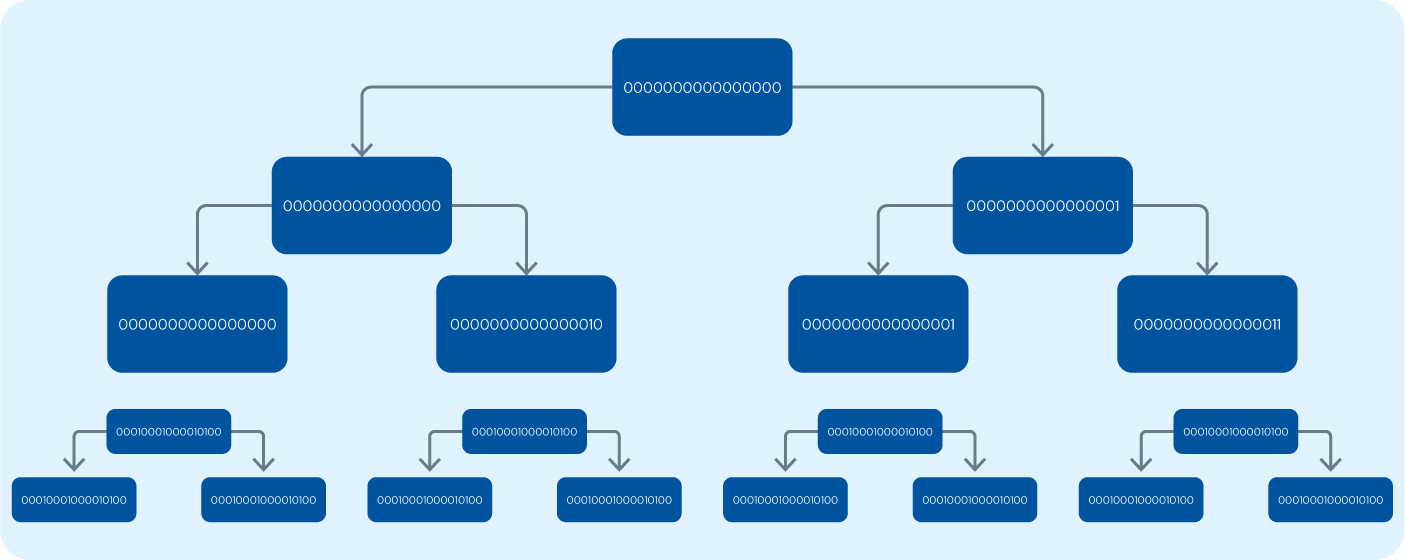
Figure 1: Generating a Large Entangled State
This is where quantum parallelism comes from. You can explore most of the possible computation paths in a single run. At the end of the computation, a measurement of the state is taken, which results in one of the possible outcomes. If the topology of the computation is chosen wisely, the probability to get to the right result can be strongly enhanced. This point is crucial in understanding the power of the quantum computer. In a classical computer, if you have different computational paths, you need to add the probabilities of each path. In a quantum computer, the different paths are in a superposition. You do not add the probabilities but the so-called probability amplitudes, which are complex numbers. This creates an interference pattern, where some results are strongly enhanced and some are strongly reduced. This has been dubbed “quantum choreography.” Getting the right choreography is the task of the quantum programmers. Quantum algorithms work by manipulating these amplitudes so that the choreography leads to one of the following:
- Destructive Interference: Wrong computational paths have amplitudes that cancel each other out (like waves meeting peak-to-trough)
- Constructive Interference: The correct computational path has amplitudes that reinforce each other (peak-to-peak)
It is clear that a quantum computer is not simply a more powerful computer. It does not perform each step faster or compute with more bits than a classical computer. However, due to this exponential parallel processing and the interference between computational paths, it can perform some tasks much faster than a classical computer. It may solve a factoring problem exponentially faster than any conventional computer and, as a result, threaten the public key cryptography currently used.
Intro to AI
The goal of many AI systems is to approximate or exceed human-like intelligence and performance on specific tasks using computational methods. They do this by learning patterns from data that humans collect or curate and then applying what they have learned to new inputs. There are several common types of AI models, including large language models (LLMs), neural networks, convolutional neural networks (CNNs), generative models, and generative adversarial networks (GANs), amongst others. The type of model utilized will depend heavily upon the use case. For example, large language models such as ChatGPT are typically implemented as neural networks and are a form of generative AI (GenAI). As its name would indicate, GenAI generates text, code, or other content in response to prompts. Other places you may have encountered GenAI include chatbots on retail websites, images used in marketing materials, or even audio. GenAI has progressed so rapidly that one can create images and video clips with a simple prompt.
Generative AI is one type of AI that we’ve all likely encountered, while other forms of AI may be used without your knowledge yet still impact you on a daily basis. For example, neural networks are a type of model used in machine learning that are used by social media platforms to suggest content to you. This includes videos, images, restaurants, fashion, and any other topic or item you may be interested in. They are not always accurate, but our own data used to train AI models often leads to the AI knowing more about us than even we do. This is why they are so useful to big tech organizations, retail giants, the food industry, financial institutions, media outlets, and just about anyone else you may come in contact with in your daily life. At the end of the day, AI is being utilized in a variety of ways and impacting our lives with and without our knowledge.
Another way to categorize AI systems is to think of them as weak and strong AI systems. Weak AI refers to systems designed to perform specific tasks within a limited domain, such as language translation, game playing, or question answering; current systems like ChatGPT fall into this category. Strong AI, often discussed under the term Artificial General Intelligence (AGI), refers to a system capable of self-training and learning from large and diverse datasets and possessing higher inference and generative capabilities than the average human.
There are also several steps to take before an AI solution is useful to the user. The first step is to identify internal business use cases that could benefit from an AI solution. Next, an AI specialist needs to identify which AI technology to use and the training data that will be required to train the model. After obtaining the training data, the AI model must be trained and tested to confirm that the expected output is being generated. The final step is to release it for use. There are many other sub-steps and post-release maintenance to consider but with these high-level steps, an AI model is created.
Intersection of Quantum Computing and AI
AI training requires large computing power that even the most advanced GPUs can struggle to keep up with1. The parallel computing power of quantum computers can meet these needs. It’s important to keep in mind that getting to this stage may take some time. Initially, quantum computers will have a restricted number of qubits and may not be able to work through the quantity of data that AI requires. However, with time this will change. As the number of stable logical qubits increases in a quantum computer, the amount of data processing that can be accomplished will also increase.
Much of the AI training involves tensor computations. The Harrow-Hassidim-Lloyd (HHL) quantum algorithm is theorized to speed up exponentially over classical algorithms on ranges of tensor computations—an inversion of sparse and well-conditioned matrices[^2]. However, the difficulty of realizing this algorithm is questioned[^3] and its true effectiveness is not certain. For the computations using these types of matrices, the quantum computer should therefore exponentially speed up the training.
Quantum machine learning is an active research area. Quantum computing can enhance AI with the Quantum Support Vector Machine (QSVM)2. Classical SVM is a method to classify data into labels. Enhancing SVM with a quantum kernel for data mapping improves model prediction. This leads to better optimization3 and pattern recognition. Scientists have built quantum versions of many of the traditional machine learning algorithms, including QSVM, QPCA4, and Q-KNN5, and are beginning to experiment with using quantum computing to speed up certain elements of the transformer model6 or build an entire quantum transformer model7.
However, AI model training takes place toward the end of the AI model journey. There is potential for quantum computers to aid AI earlier in the process. The basis of AI is data. Not just any data, clean data. With the help of quantum computers, there is the potential to clean the data required to train the models more effectively and with greater speed. One approach is to use quantum computers to simulate some chemical or biological processes and use the resulting data as an AI model’s training data so that it can predict results of more complicated processes8,[^11]. After this, we can harness the ability of a quantum computer’s sheer speed to train the AI models faster. And lastly, a quantum computer’s ability to perform parallel computations gives it the power to increase the ability for AI to ingest and compute information significantly once the AI tool is in production and in active use.
The next use cases are Quantum Neural Networks (QNNs). This is exactly what it sounds like: running a machine learning algorithm based on neural networks on a quantum computer. Neural networks are modeled after the human brain and are interconnected to process information in layers. This allows the neural network to make predictions based on patterns related to image recognition and natural language processing. By running the neural network on a quantum computer, the ability to process information may be enhanced, increasing the effectiveness of the machine learning algorithm.
Let’s now consider the use cases where AI can be used to enhance quantum computers. Designing quantum computer algorithms requires immense intelligence and understanding of quantum theory, which is a difficult subject. The high inference and generative power of the most advanced AI system may assist in designing new quantum computing algorithms9, 10 and error-correction protocols, which are two of the major hurdles facing quantum computing advancement. There is the possibility that AI may be part of an error-correction solution to formulate a Quantum-AI hybrid protocol11. The possibility has been realized by Google DeepMind’s AlphQubit12 and by Nvidia’s CUDA-Q QEC[^16].
The next use case relates to the lack of programmers trained on quantum theory, which also limits the progress of quantum computing software. AI-powered coding assistants have already sped up classical software development in general and may be able to assist with the development of quantum computing software and algorithms. There are tools in development and in the market today that leverage traditional software coding languages and convert it to quantum code to be run on a quantum computer. In addition to this, if AI can be added to the mix to include quantum theory, it can help make quantum code easier for human programmers to code, review, and understand.
In addition to these two emerging technologies working in tandem, they may interact and be integrated into a single, far-advanced solution for a given problem13. It’s clear that combining them opens up a whole range of possibilities to address computational challenges. To reach their optimal functionality in the interim, they have the potential to help each other reach those goals faster.
In order to do this, it is recommended that the proper guardrails are utilized within AI models to prevent malicious coding—intentionally or unintentionally—by the AI model. This is especially important if AI is being utilized for cryptographic programming to be used to encrypt data and keep it safe from bad actors. Besides technical guardrails built into the AI models and training for those who are utilizing the AI to create quantum code, there needs to be human review at all steps during code development, testing, and release into production to ensure the code being generated is secure prior to and after its use.
Applications of Quantum Computing and AI
We’ve discussed several use cases at the intersection of quantum computing and AI and how these two emerging technologies can support each other’s advancement towards quantum advantage or superintelligence, respectively. In addition to these technologies supporting each other’s development, there are several current and future applications of quantum computers and AI working together to be considered.
There is the potential future application of AI running directly on a quantum computer, with a functional AI running on a quantum computer that has shown a quantum advantage. QAI will allow AI to run on a quantum computer and significantly shorten the learning and processing steps by an order of magnitude we haven’t seen before. The AI may be able to execute actions at a pace humans will not be able to keep up with. The implications of QAI extends to all of humanity as it will impact career opportunities, data privacy, cybersecurity, socio-political stability, the global economy, and more. The implications are vast. The impacts are not always predictable, as is the case with any emerging technology. In this case, with the intersection of two emerging technologies, it will be at a scale larger than we can imagine.
QAI needs three elements to sustain it; data, algorithms, and a computational framework14. Adapting generative machine learning algorithms to use quantum computers has potential many industries, like the finance industry15. And many other AI algorithms may be sped up by quantum computers.[^20]
One of the first steps for building a viable AI model is the “learning” step. At this point the AI is ingesting information aka learning. With the help of quantum computing, it is theorized to shorten this step with its ability to perform parallel computations. This is referred to as Quantum Machine Learning. Once an AI tool or technology is deployed in inference or generative mode, it does not require extraordinary computing power. That is the case with all current AI algorithms. But future AI algorithms may surface, which will need to ingest and simultaneously compute information to give rapid results. Once again, quantum computers are theorized to be able to come in and expedite the ingestion step as well as the computation step to give a result18.
Molecular chemical design and molecular drug discovery both require finding useful molecular structures from quadrillion or even quintillion candidate structures. AI algorithms have been used to eliminate less than optimal candidates[^21]. Quantum simulation algorithms have been proposed to converge the useful candidates[^22]. Marrying the two types of approaches may greatly speed up these science and engineering endeavors.
However, there are some hurdles to overcome before the two technologies can truly integrate and show a quantum advantage within the process. There is the ever present issue of “noise” in qubits that must be minimized lest they result in quantum errors that could result in the loss of information. Besides the overarching and ever present issue of noise, there is the general issue of the lack of holistic and definitive benchmarks to compare QAI and AI. Then there’s the issue of cost. How much will running AI on a quantum computer really cost? That will come down to the algorithms themselves, and those are difficult to predict18. The training of LLMs requires high power consumption. Recently, Cornell Engineering proposed a quantum computing-based optimization framework to reduce large data center handling of AI workloads by up to 12.5%[^23]. As the training of LLMs with more parameters will require even more power, QAI can help optimize and reduce power consumption and carbon emissions by data centers.
Conclusion
There are still areas of research required so that QAI can show dominance in the field of science and technology. First, we need more research into creating QAI algorithms that do not require a classical AI counterpart. This means the creation of quantum machine learning and AI algorithms that are aligned to a specific problem. Second, we need more research into creating systems, models, and applications that would bridge the gap between the complicated research and what can be done in a practical sense with QAI. In other words, a computational framework for QAI18.
Additionally, there are a few other areas of research that are actively being worked on in the quantum computing research ecosystem. This includes, but is not limited to, qubit “noise” reduction, qubit fidelity, qubit quality maintenance, scalability of qubits, and quantum error correction. As these areas are advanced and eventually their impact mitigated, quantum computers will be that much closer to showing a quantum advantage and, therefore, a QAI advantage.
Overall, quantum computing and AI have huge potential for helping each other reach an advantage but also to work together in the future as QAI. From quantum computing helping to clean data for and train AI to AI helping with quantum simulation algorithms, these synergies are just the start. With time, the use cases for QAI will also grow dependent on which technology sees an advantage first. So keep an eye on these technologies as they mature individually and as they evolve toward their synergistic future as QAI.
| [^2]: [HHL algorithm | Wikipedia](https://en.wikipedia.org/wiki/HHL_algorithm) |
| [^3]: [Quantum Machine Learning Algorithms: Read the Fine Print | Scott Aaronson](https://www.scottaaronson.com/papers/qml.pdf) |
| [^11]: [Towards an exact (quantum) description of chemistry | Google Research](https://research.google/blog/towards-an-exact-quantum-description-of-chemistry/) |
| [^16]: [Real-Time Decoding, Algorithmic GPU Decoders, and AI Inference Enhancements in NVIDIA CUDA-Q QEC | Nvidia](https://developer.nvidia.com/blog/real-time-decoding-algorithmic-gpu-decoders-and-ai-inference-enhancements-in-nvidia-cuda-q-qec/) |
| [^20]: [Quantum Machine Learning Is The Next Big Thing | The Quantum Insider](https://thequantuminsider.com/2020/05/28/quantum-machine-learning-is-the-next-big-thing/) |
| [^21]: [How Artificial Intelligence is Revolutionizing Drug Discovery | Petrie-Flom Center](https://petrieflom.law.harvard.edu/2023/03/20/how-artificial-intelligence-is-revolutionizing-drug-discovery/) |
| [^22]: [Top 20 molecules for quantum computing | PennyLane Blog](https://pennylane.ai/blog/2024/01/top-20-molecules-for-quantum-computing) |
| [^23]: [Quantum AI Framework Targets Energy Intensive Data Centers | Quantum Insider](https://thequantuminsider.com/2024/06/03/quantum-ai-framework-targets-energy-intensive-data-centers/) |
-
Fernández Pérez, I., Prieta, F.d.l., Rodríguez-González, S., Corchado, J.M., Prieto, J. (2022). Quantum AI: Achievements and Challenges in the Interplay of Quantum Computing and Artificial Intelligence. In: Julián, V., Carneiro, J., Alonso, R.S., Chamoso, P., Novais, P. (eds) Ambient Intelligence—Software and Applications—13th International Symposium on Ambient Intelligence. ISAmI 2022. Lecture Notes in Networks and Systems, vol 603. Springer, Cham, https://doi.org/10.1007/978-3-031-22356-3_15 ↩
-
Yin, T. (2024). Quantum support vector machines: theory and applications. Theoretical and Natural Science, 51, 34-42. ↩
-
R. Divya and J. Dinesh Peter, “Quantum Machine Learning: A comprehensive review on optimization of machine learning algorithms,” 2021 Fourth International Conference on Microelectronics, Signals & Systems (ICMSS), Kollam, India, 2021, pp. 1-6, https://doi.org/10.1109/ICMSS53060.2021.9673630. ↩
-
Lloyd, S., Mohseni, M. & Rebentrost, P. (2014). Quantum principal component analysis. Nature Physics, vol 10, 631–633, https://doi.org/10.1038/nphys3029 ↩
-
J. Li, J. Zhang, J. Zhang and S. Zhang, “Quantum KNN Classification With K Value Selection and Neighbor Selection,” in IEEE Transactions on Computer-Aided Design of Integrated Circuits and Systems, vol. 43, no. 5, pp. 1332-1345, May 2024, https://doi.org/10.1109/TCAD.2023.3345251 ↩
-
Prasad, Y. J. D. S. (2025). QGT: A Fully Specified Quantum-Enhanced Transformer for NISQ-era Generative AI. Preprints 2025, 2025092354, https://doi.org/10.20944/preprints202509.2354.v1 ↩
-
Khatri, N., Matos, G., Coopmans, L., & Clark, S. (2024).”Quixer: A Quantum Transformer Model,” June, https://arxiv.org/abs/2406.04305 ↩
-
Perrier, E., Youssry, A. & Ferrie, C. (2022). QDataSet, quantum datasets for machine learning. Sci Data 9, 582, https://doi.org/10.1038/s41597-022-01639-1 ↩
-
Hutin, H., et al. (2024). Preparing Schrödinger cat states in a microwave cavity using a neural network, https://arxiv.org/abs/2409.05557 ↩
-
Cimini, V., et al. (2019). Calibration of Quantum Sensors by Neural Networks, https://doi.org/10.1103/PhysRevLett.123.230502 ↩
-
A scalable and fast artificial neural network syndrome decoder for surface codes, https://arxiv.org/abs/2110.05854v5 ↩
-
Bausch, J., Senior, A.W., Heras, F.J.H., et al. (2024). Learning high-accuracy error decoding for quantum processors. Nature 635, 834–840, https://doi.org/10.1038/s41586-024-08148-8 ↩
-
Neill, C., et al. (2017). A blueprint for demonstrating quantum supremacy with superconducting qubits, https://arxiv.org/abs/1709.06678 ↩
-
Fernández Pérez, I., Prieta, F.d.l., Rodríguez-González, S., Corchado, J.M., Prieto, J. (2022). Quantum AI: Achievements and Challenges in the Interplay of Quantum Computing and Artificial Intelligence. In: Julián, V., Carneiro, J., Alonso, R.S., Chamoso, P., Novais, P. (eds) Ambient Intelligence—Software and Applications—13th International Symposium on Ambient Intelligence. ISAmI 2022. Lecture Notes in Networks and Systems, vol 603. Springer, Cham, https://doi.org/10.1007/978-3-031-22356-3_15 ↩
-
Zhu, E.Y., et al. (2021). “Generative Quantum Learning of Joint Probability Distribution Functions,” https://doi.org/10.48550/arXiv.2109.06315 ↩