Confronting Shadow Access Risks: Considerations for Zero Trust and Artificial Intelligence Deployments
Released: 05/06/2024

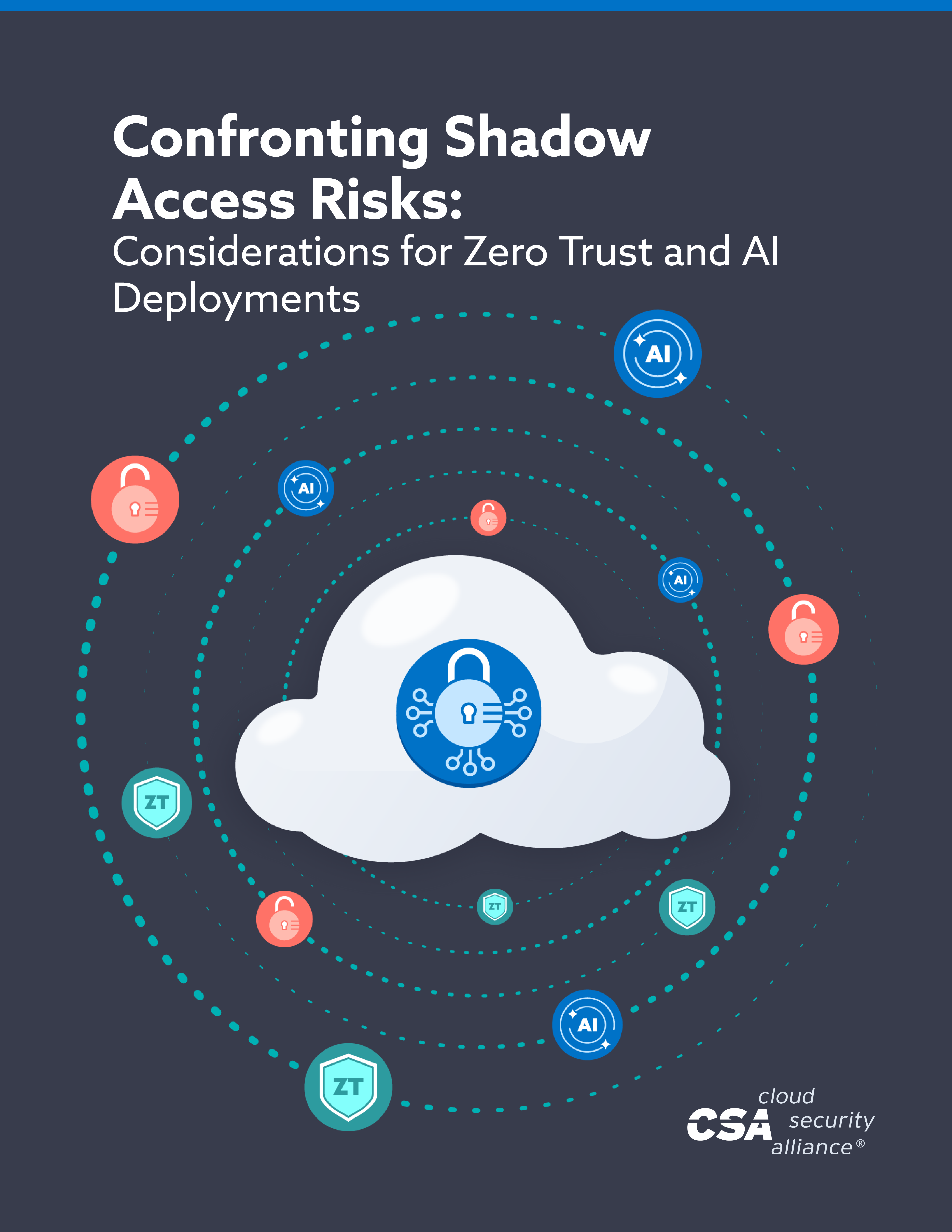
Shadow Access, a growing concern within cloud computing and Identity and Access Management (IAM), refers to unintended, unauthorized access to systems and data, often intensified by the complexities of modern technological environments. Organizations from small to large often find out the hard way that their previously secure starting point has silently evolved into an unsecure one, the consequences of which are potentially catastrophic. Adding an additional dimension, the increasing prevalence of Artificial Intelligence (AI) introduces new Shadow Access risks, such as unauthorized access, sensitive data exposure, and governance issues.
Zero Trust, centered on the philosophy of “Never Trust, Always Verify,” is positioned as a countermeasure to Shadow Access, advocating for robust authentication and vigilant access control. However, the practical implementation of Zero Trust faces challenges in cloud-native architectures where Shadow Access is prevalent.
This publication by the CSA Identity and Access Management Working Group delves into these intersections of Shadow Access, AI, and Zero Trust, and underscores the necessity of adapting traditional Zero Trust IAM approaches to the nuances of AI technology.
Key Takeaways:
- What Shadow Access is and why it exists
- What Zero Trust is
- The impacts of Shadow Access on Zero Trust
- What Zero Trust can do to mitigate Shadow Access
- The top concerns regarding Shadow Access, AI, and LLMs, including change management, data access visibility, identity verification, content authorization, and more




Download this Resource
 Best For:
- IAM professionals
- Cloud and cybersecurity professionals
Premier AI Safety Ambassadors

Premier AI Safety Ambassadors play a leading role in promoting AI safety within their organization, advocating for responsible AI practices and promoting pragmatic solutions to manage AI risks. Learn more about how your organization could participate and take a seat at the forefront of AI safety best practices.